Saturday, July 20, 2013

THE GRAPES OF WRATH


“I figured about the Holy Sperit and the Jesus road.  I figgered, ‘Why do we got to hang it on God or Jesus?  Maybe,’ I figgered, ‘maybe it’s all men an’ all women we love; maybe that’s the Holy Sperit—the human sperit—the whole shebang.  Maybe all men got one big soul ever’body’s a part of.’  Now I sat there thinkin’ it, an’ all of a suddent—I knew it.  I new it so deep down that it was true, and I still know it.” (The Grapes of Wrath)

We spent Thursday and Friday in discussion of the novel, talking about Steinbeck’s life at the time and the journal he kept (Working Days), Steinbeck’s use of the two great narrative traditions of the 20th century (the adventure novel and the domestic tradition) in writing The Grapes of Wrath, and the process of publishing the novel (Steinbeck first published “Harvest Gypsies”, a series of objective articles written for The San Francisco News, about the Hoovervilles and the plight of the migrant worker).  Steinbeck Institute participants learned the history of the Dust Bowl through discussion and while watching the 1936 documentary film, “The Plough That Broke The Plains” (though we could not come to a consensus as to the root cause of the environmental, economic, and humanistic disaster).  Our discussions moved from the music of the time to other texts and novels that stand in comparison (e.g. Uncle Tom’s Cabin), from the act of ‘unpacking’ (finding a word/phrase that doesn’t seem to fit as in Steinbeck’s repeated use of forms of the word 'participation') to the intent of the interchapters, from the notion of ‘home’ and ‘family’ to the novel’s relevance to issues of today (e.g. housing foreclosures and immigration reform).  Really, I could go on and on and on…

I began this entry with Casy’s words spoken early in the The Grapes of Wrath.  In these few sentences, to me, is the crux of the novel.  Whether you are talking about the ‘I’ to ‘we’ prevalent throughout the story, the oneness with the land, or the evolution of what the characters view as ‘family’, this “one big soul”, this “human sperit” lies at the heart of the novel. 

I am so lucky to have been able to experience the wisdom (and incredible passion) of Dr. Robert DeMott (Ohio University) and to gather wonderful teaching ideas from Dr. Persis Karim (San Jose State University) and Dr. Mary Adler (California State University Channel Islands).  All of the lectures and discussions had me writing furiously in my journal, as I didn’t want to miss anything they taught us!

We’ve spent a week at this institute and I find that our directors Dr. Susan Shillinglaw (San Jose State University) and Dr. William Gilly (Standford University Hopkins Marine Center) are so well suited to leading this institute and to working with each other.  

In their presence, you immediately feel relaxed.  They are quite capable of getting you to speak your mind and then gently question what you’ve said in an effort to make you really think about your words.  The mark of truly great educators!
Dr. Susan Shillinglaw
(Photo courtesy of San Jose State University website)
Dr. William Gilly
(Photo courtesy of Standford University website)

Wednesday, July 17, 2013

THE SALINAS VALLEY


Today was one of those days you hate to have come to an end.  Piling into the great white whale of a van, Dr. Susan Shillinglaw (one of our enthusiastic directors) navigated eager Steinbeck students to the Salinas Valley.  We passed fields of strawberries and lettuce and saw farm hands, doubled at the waist, picking and cutting, and then moving on to the next plant.  The sky was blue with “dumpling summer clouds” (The Red Pony) and the air was warm with little wind.

 Our first destination was Red Pony Ranch (Herbert Ranch).  Steinbeck's visits to the ranch, his pony Jill, and a death in the family, were the inspiration for his Red Pony Stories.  Some of the photos I include here have been altered to reflect my own emotions as I kicked up clouds of dust and listened to the barking dogs and lowing cattle.


Looking toward the Gabilans

The Herbert Homestead


Our second stop was The Steinbeck House in Salinas.  It is here Steinbeck was born in 1902 to John E. Steinbeck and Olive Hamilton and where he wrote the stories in The Long Valley.  The home is now a noisy, crowded restaurant, I did not find my visit the emotional experience I was expecting. The structure houses some memorabilia donated by members of Steinbeck’s family and it was interesting to note those personal belongings especially the bed where Steinbeck was born. 

 Walking a few blocks down the street, we arrived at The National Steinbeck Center.   The exhibits are designed around Steinbeck’s novels with interactive displays, personal letters, and memorabilia that put Steinbeck’s novels within an historical framework. 


Next stop was the cemetery to pay homage to Steinbeck’s grave.  Also buried here are his parents, an uncle, two sisters, and the Hamilton family that Steinbeck depicted in East of Eden.  I love cemeteries.  Steinbeck’s marker was decorated with pinecones, coins, a medal, and a little volume of ‘thank-you’ notes left by devotees.  I tried to block the noise and presence of everyone out of my head so I could have my moment of alone time at the grave (fellow institute participants, please do not be offended by this).  I know it’s just a memorial, a block of granite, a ‘spot’.  Still, it really meant something to me to be there.


Susan Shillinglaw reads from East of Eden

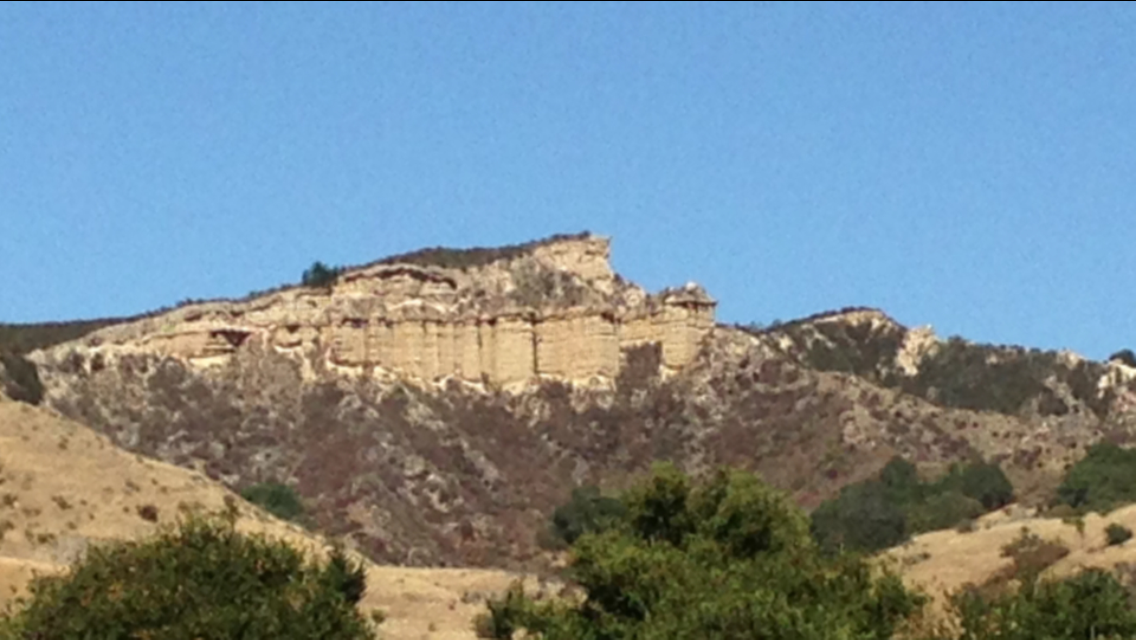
Our final destination was the setting of Pastures of Heaven.  It was here that Steinbeck visited his Aunt Mollie and pretended the sandstone cliffs were the protective buttresses of a medieval fortress.  He also penned the short story “The Murder” based on an actual murder on the ranch.

Somewhere along the line, photos were deleted (imagine that!).  I regret I do not have more from the Steinbeck House and I somehow missed Olive Hamilton's grave marker.  I will beg photos from other institute participants and submit them later.

Of Mice And Men (from Tuesday 7/16/13)


I took 6 pages of notes during our discussions of the novel and I know I still missed so much!  A few of the discussions involved how Steinbeck defined family and friendship, the role of ‘hands’ in the novel, Lennie’s vision of the rabbit, the reaction of the Boss, Curley, and Slim to George and Lennie traveling and working together, Crooks role, and how the setting fit the story (the story has been described as claustrophobic). 


I thought one of the more interesting discussions involved Curley’s wife.  How do you see her?  Was she a tramp?  Jailbait?  Was she lonely and seeking companionship?  Steinbeck wrote, in a letter to Claire Luce, who portrayed the wife in the play adaptation, “She is a nice, kind girl and not a floozy.  No man has ever considered her as anything except a girl to try to make.”  And later in the letter, “…there has probably been no consummation there since Curley would not consider her gratification and would probably be suspicious if she had any.  Consequently she is a little starved.”  Makes me see her in a little different light.

In the afternoon actor Tony Newfield talked about the various adaptations of the play-novelette.  On 11/23/37 the play opened on Broadway and ran for 207 performances.  It won the New York Drama Critics award for Best Play for the 1937 – 1938 season (a forerunner to the Tony Awards).  Steinbeck, although involved in the production, was writing The Grapes of Wrath and did not see any performances. In 1958 the play became a musical.  Though it only ran for 6 ½ weeks, critics loved it!  Steinbeck cried when he heard the piece “Candy’s Lament”.  We also performed scenes from the play.  I was George in one of the earlier scenes when Lennie tells George, “I like beans with ketchup.”
 
 Susan Shillinglaw and Tony Newfield


In the evening we watched the 1939 film version.  The film was the first in history to have a scene occur before the credits.  It was nominated (along with “Gone With The Wind”, “Stagecoach”, and “The Wizard of Oz”) for Best Picture at the 1940 Academy Awards. Lon Chaney, Jr. was also nominated for an award (for his portrayal of Lennie) as was Aaron Copeland for his musical score.  What a beautiful, moving film!

The Long Valley (from Monday 7/15/13)


The title of a very early Steinbeck short story, “The Kittens and the Curtain” (not published until 2002 by McIntosh and Otis, Inc. and Stanford University Special Collections), sounded fun to me.  A story about kittens!  How cute!  Don’t be fooled.  Steinbeck crafted this short story of complicated, seemingly transparent characters and a story as disturbing as anything.  There are flaws in the writing as Steinbeck developed his particular style.  This undiscerning reader didn’t notice until we discussed it in our first class at the Hopkins Marine Center, our Steinbeck Institute base of operations.

We began with this story and moved to a discussion of The Long Valley, Steinbeck’s collection of short stories, written primarily between 1933 and 1934 while caring for his mother who was in declining health.  The book is a wealth of wonderful, thought-provoking prose that at times made me cry (“The Red Pony”), jump to anger (“The Vigilante”) and had me asking ‘What?’ (“Saint Katy the Virgin”).  The stories are sensual, they present characters that have dreams realized (or lost) at such cost and who grow from their losses.  A fellow participant described the stories as having been written ‘…in a minor key’ (Tracy M.), softer and different from his novels which tend to be loud and crowded.  If East of Eden is likened to a blockbuster at the movies, these short stories are the independent, quieter art-house films you would see at The Esquire (an art-house theatre in Cincinnati).

Our first class at Hopkins was spent with Dr. Chris Fink of Beloit College in Wisconsin.  He discussed elements of the short story (this is where I tried to keep my mouth closed…had we been talking about mitosis, things would have been different) and applied those elements to the stories in The Long Valley.  Honestly, before I received my reading list, I didn’t know Steinbeck had written short stories.  Oh, I had read his short novels (The Red Pony, which was published in The Long Valley, The Pearl and Of Mice and Men) but skipped over the short stories.  It was fun for me to have something completely fresh and new to read and I was drawn into the lives of Elisa (“The Chrysanthemums”) and Mary Teller (“The White Quail”) and Peter Randal (“The Harness”), Jody (“The Red Pony”) and Johnny Bear (“Johnny Bear”).  If you haven’t picked up The Long Valley, you should.  I already have creative ways to implement them in my Biology classes (yes, you read that correctly…biology).
The sandstone cliffs at Corral de Tierra that served as the backdrop of "The Murder"
The Pastures of Heaven
Our evening class was directed by Dr. Matt Spangler (www.matthewspangler.org) an associate professor of Performance Studies at San Jose State University.  After a very long day of discussion, I was afraid I would lack the energy for what Matt asked of us.  We employed one of six techniques for adapting narrative fiction to live performance.  Matt has a slew of experience and awards.  He adapted The Kite Runner for live performance!  I would love to see that.  He and a fellow actor performed “The Chrysanthemums” for us Sunday night.

My ‘cast’ of three decided to adapt and perform a section of “The Red Pony”.  Jody is anxiously awaiting the birth of his colt from Nellie and Billy Buck has had enough of Jody’s impatience.  

We chose choral scripting for our piece, mimicking the sound of ‘A little misting rain fell’ and repeating the line ‘The night was black and thick.’  We ‘screeeeeeched open the barn door and comforted poor Nellie with soft repetitious ‘So, Nellie’.  
At Red Pony Ranch

It was actually invigorating and quite fun!  Matt’s intent with this exercise was to develop a deeper, more personal understanding of the literature.  The performances were rich with laughter and insight and I was exhausted after.  No late night cavorting for me…straight home and to bed!


On a more travelogue note, I spent my lunchtime sitting on the beach at Hopkins, watching the seals watching me.  


Sunday, July 14, 2013


Today I am going to reuse my first blog.  It explains why I named my blog “Battered Suitcases” and I hope it will give the reader a bit of insight into my minimal creative writing skills!

Yesterday afternoon I arrived in Monterey, checked into the Victorian Inn, had my complimentary wine, cheese, and fruit, and took a nice walk through the Cannery Row area of town.  I’m including a few photos here.


The view from my balcony.


Stay tuned for details of this photo!

I am not a creative writer.  I’ve written journals intended only for an audience of one…me!  Please excuse poor word choices, incoherent ramblings, dangling participles, mixed metaphors and tenses.  This entry is meant to explain why I chose the title “Battered Suitcases" for my blog.  I welcome all comments and critiques.  Please be kind and constructive!

The battered suitcase I carry every day is bursting!  It is filled with the visions of my son Cal at his birth and of the deaths of my husband, mom, grandparents, father-in-law, friends, and the suicide of my nephew.  It is filled with failures and successes, experiences at home and of cultures at the far ends of the earth; with the profound silence on a windless day on the ice of Antarctica, with learning the names and scents of the wildflowers of Kentucky; it is in my students’ frustrations (as they become mine) and the moment when they finally understand the relationship between pressure and the volume of a gas (these also become mine).  

I’ve crammed in the Charm School dropouts, members of the J and J Club, the Bobwhites of St. Pius, my friends, acquaintances, and those individuals I would rather forget.  My suitcase overflows with pride as I watch my son grow into a man of integrity and compassion.  It pulses with the struggles of my family and with my neighbors around the globe.  Packed into my baggage is the discipline my father gave me: the desire for order, for promptness, for simplicity and organization.  And next to it is my mother’s spontaneity and her gift for making the simplest gesture seem grand.

My battered suitcase sits by the side of the road (or in my heart) waiting to squeeze in more of everything this road of life has to offer!

Friday, July 12, 2013

The Voice of a Region


“A journey is a person in itself; no two are alike. And all plans, safeguards, policing, and coercion are fruitless. We find that after years of struggle that we do not take a trip; a trip takes us.”  John Steinbeck

Tomorrow, an adventure, a journey begins for me.  I was selected to participate in the institute "John Steinbeck, the Voice of a Region, a Voice for America”, sponsored by the National Endowment for the Humanities (http://www.steinbeckinstitute.org/index.html).


Most people would consider my expedition to Antarctica in 1999 or the immersion into Ukrainian culture in 2012 as true adventure and I will certainly not deny that both journeys push my boundaries. Participating in a program not directly related to science is no less of an adventure and in many ways, a riskier undertaking for me.  Since I read The Red Pony at the age of 10 and secretly read The Grapes of Wrath as an 8th grader (there is a story here, saved for another day), John Steinbeck has been my favorite author.  I read most of Steinbeck’s novels while a college student.  Unfortunately, his works were never part of the courses I took for credit or the many literature classes I audited (my early version of a book club).  This institute will afford me the opportunity to study Steinbeck with other like-minded individuals.  Yes, this puts me in a risky position far outside what is familiar and comfortable to me.  In science, the analysis of empirical data is customary to explain natural phenomena. Writing as description without numbers is much less familiar, thus this institute’s status as ‘adventure’ in my eyes.


Photo courtesy of The Steinbeck Institute

Tomorrow I journey to Monterey California, Steinbeck country.  The participants in the institute will visit Salinas Valley and Cannery Row, we will engage in discussion with scholars who have devoted their studies to the works of John Steinbeck, we will experience tidal pools and plankton tows and whales (I hope), we will participate in a variety of pedagogical practices and develop lessons for our classrooms.  We will see John Steinbeck as a “significant cultural voice--as novelist, dramatist, visionary ecologist and enduring commentator on twentieth-century American values and ideals.” (The Steinbeck Institute).

The opening quote suggests “…we do not take a trip; a trip takes us”.  I wonder where this trip will take me.


Friday, April 27, 2012

Faces of Ukraine's Future


In a few hours I will leave Ukraine.  I am homesick but it is always difficult to leave a place where you’ve felt at home.  Ukraine is so rich in history and its people are so proud of their heritage.  Today, bombs were detonated in a town called Dnipropetrovsk.  Reports say 27 people were injured including children.  Who set the bombs is uncertain.  Also today, a rally was held in Kyiv (where I am at this moment) to protest the incarceration of Julia Tymoshenko.  Over 2000 people marched in this protest.  This is Ukraine today.  Who knows how the Ukraine of tomorrow will look.

Ukraine is a country in flux.  It is young when you consider its independence but old when you realize that Kyiv Rus, the beginnings of Ukraine, was established in the 9th century by Vikings!

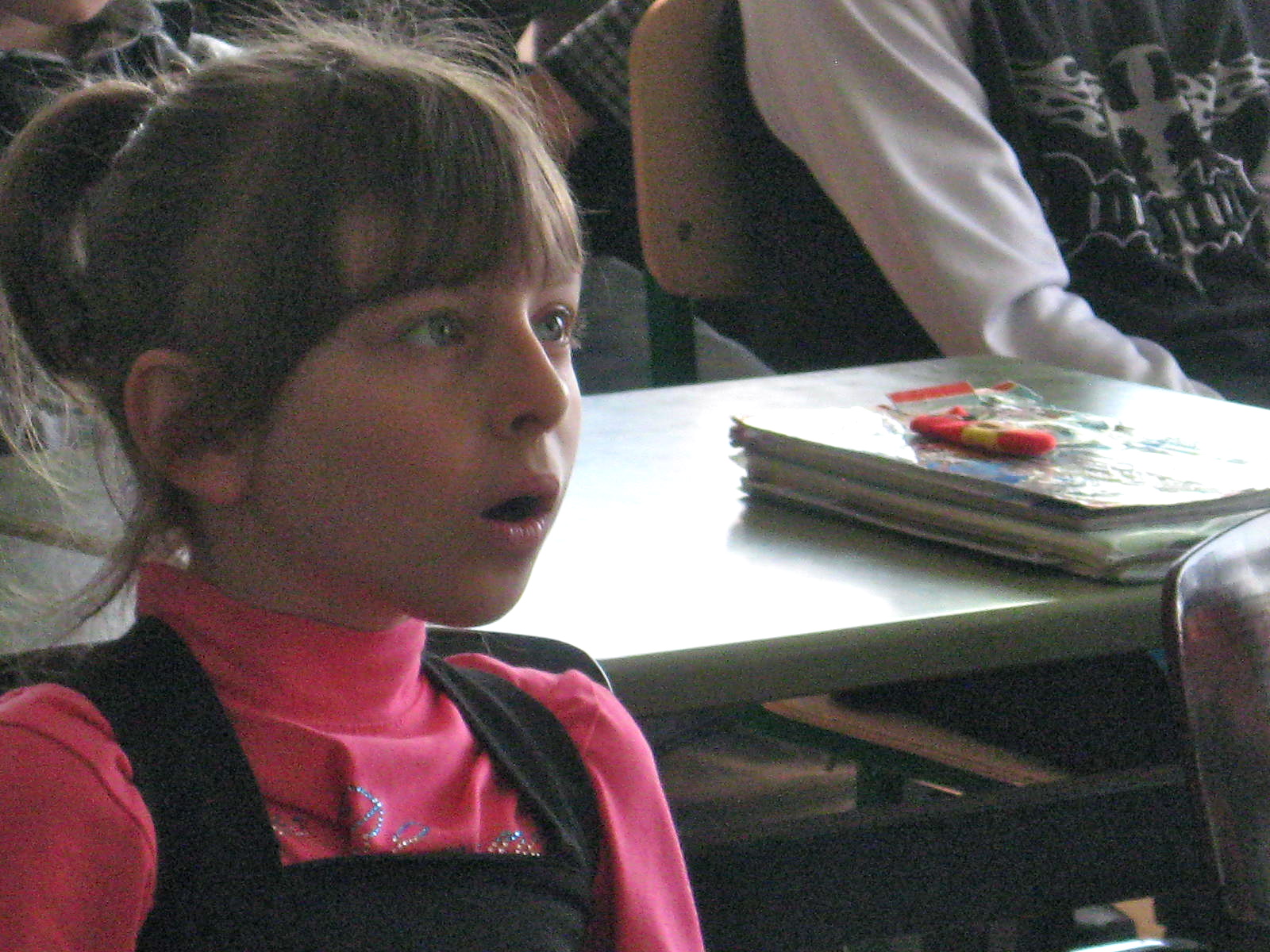
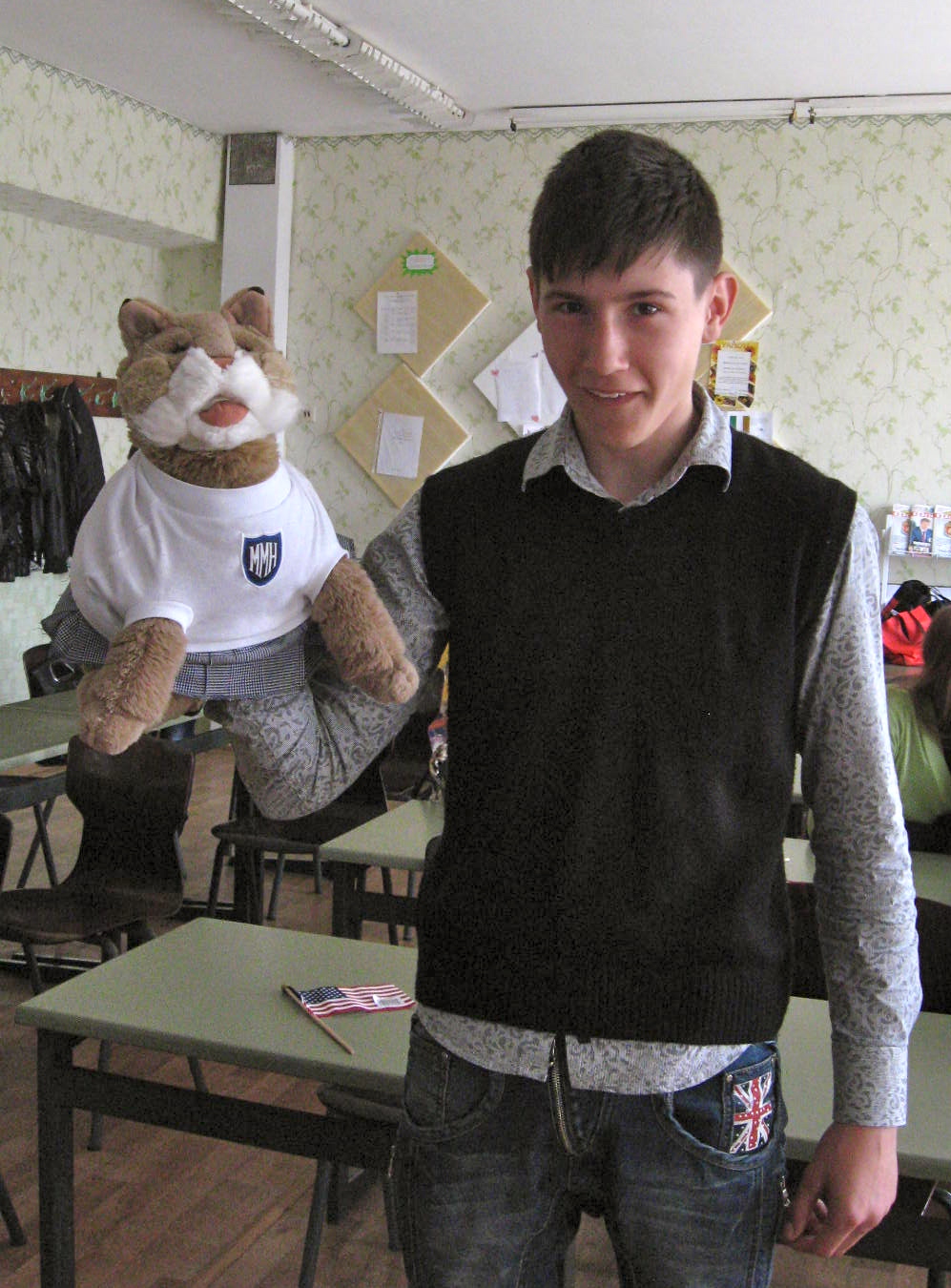
I will continue to post blogs because I have so much more to say and so many more photographs to share.  Today I leave you with photos of the children of Ukraine. In them lies the heart and the future of their country.